Fully Automated Luxury Capitalism

Fully Automated Luxury Capitalism

The substitutive effect In the future, machines will replace humans in jobs. This is not controversial: it’s what machines have done since well before the start of the industrial revolution. Petrol pump attendants were replaced by automated pumps, secretaries were replaced by Microsoft Office. This is what economists call the substitutive effect of automation: humans are substituted in jobs by machines. The complementary effect From time to time, fears have been expressed that humans would run out of jobs entirely. I first wrote about this concern back in 1980, and like many other people at the time, I under-estimated the...
The Impact of AI on Professional Services

The Impact of AI on Professional Services

Accountants and lawyers to use AI to cannibalise their business – before someone else does When you hear the word “automation...”, does your mind skip straight to “…destroys jobs”? If so, there should be a few stops in between. Automation is about removing friction, driving down costs, speeding processes up, and generally improving efficiency. Making goods and services better and cheaper is a good thing: it makes us all richer. There is scope to do this in all walks of life, and not least in professional services, such as accountancy and the law. Much of the work done by the...
Free: Review copies of “Pandora’s Oracle”

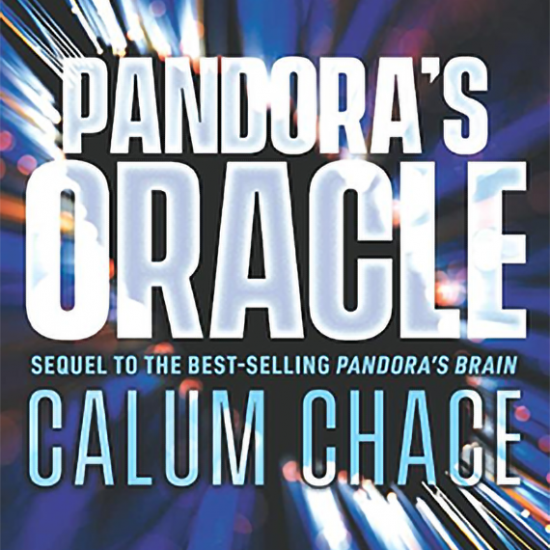
Free: Review copies of “Pandora’s Oracle”

Once upon a time, in a galaxy far, far away, I wrote a novel called Pandora’s Brain. I’ve just finished the sequel, Pandora’s Oracle, and review copies are available – free, gratis, and for nothing. Let me know if you would like a copy – PDF, or a MOBI file for your Kindle. Pandora’s Brain was published in 2014. I wrote the first draft of a sequel the following year, but I wasn't happy with it, so it sat alone inside a computer, un-read and un-loved. I went on to write a series of non-fiction books about AI. I decided...
Book review: “How Innovation Works” by Matt Ridley

Book review: “How Innovation Works” by Matt Ridley

How Innovation Works A Review of “How Innovation Works” by Matt Ridley Innovation, according to Matt Ridley, “is the reason most people today live lives of prosperity and wisdom compared with their ancestors”. If this is true, then we should obviously all be keen to learn how to generate more of it. Matt Ridley is one the best non-fiction writers of his generation. He could be described as England’s Yuval Harari – minus the messianic vegetarianism, and the obsessions with religion and meditation. His latest book is a pleasure to read: he carries his considerable learning with an engagingly light...
Ten lasting impacts of the virus

Ten lasting impacts of the virus

We’re all wondering how to survive the virus: how to stay alive, and also solvent. Assuming we manage that, what will be its lasting impacts? 1. Appreciation of exponentials The rising death tolls in many countries has been shocking to watch. Many people are getting their first up-close-and-personal view of the astonishing power of exponential growth. We have seen it for decades in the dramatic growth of computing power described by Moore’s Law, but like the mythical boiling frog in the saucepan (it really is a myth: frogs are not that daft), we acclimatise to improvements on that timescale, and...
Book review: “A World Without Work” by Daniel Susskind

Book review: “A World Without Work” by Daniel Susskind

Technological unemployment and economists The term “technological unemployment” was popularised in the 1930s by the celebrated economist John Maynard Keynes. Fifty years later, another renowned economist called Wassily Leontief warned that jobs for humans might follow the same path that jobs for horses did in the early 20th century. So the idea has a respectable economic heritage, but economists are still arguing about whether it will actually happen. The latest contribution comes from Daniel Susskind, a member of an unreasonably talented family of lawyers, economists and academics. His economic credentials are strong: previously an adviser at Number 10, he is...
Change has never been this fast.  It will never be this slow again

Change has never been this fast. It will never be this slow again

The 2010s were an ironic decade. Most metrics show that human welfare improved at an extraordinary rate, but many of us seem to be fearful or resentful, or both. The world is far richer in 2020 than it was in 2010, and global inequality is declining. There is still plenty of poverty, egregious inequality, and injustice, and there are still brutal wars and civil unrest. But overall, life expectancy is sharply up, and child mortality and deaths during childbirth are sharply down. Despite global warming, the number of deaths and injuries from climate-related disasters has fallen significantly, and many rich...
Review: "The Age of AI" presented by Robert Downey Jr

Review: "The Age of AI" presented by Robert Downey Jr

A YouTube series, presented by Robert Downey Jr Robert Downey Jr is best known as Tony Stark, the character behind Iron Man in the Avengers movies. It is said that Downey Jr modelled his portrayal of Stark on Elon Musk, the creator of Tesla and SpaceX, and one of the most outspoken commentators about artificial intelligence. Musk famously said that by developing advanced AI we are “summoning the demon”, and that we must work hard and fast to ensure it remains safe. In fact he thinks we must develop the technology to link our minds intimately with AI systems, so...
Review of “More from Less” by Andrew McAfee

Review of “More from Less” by Andrew McAfee

The New Optimists Andrew McAfee wants to cheer you up. If you read his latest book with an open mind, he might well succeed. McAfee, an MIT economist, is joining the New Optimists (Bill Gates, Stephen Pinker, Hans Rosling and others) in trying to persuade us that the world is not going to the dogs. The central claim of “More From Less” is that capitalism and technological progress are allowing us “to tread more lightly on the earth instead of stripping it bare.” Unfortunately, he admits, this good news is hard for many people to believe because catastrophism has such...
Book review: "The AI Economy" by Roger Bootle

Book review: "The AI Economy" by Roger Bootle

Roger Bootle is not afraid to think and say unconventional things. He is that rare phenomenon: a professional economist who thinks that Brexit is a Good Idea. Indeed, he belongs to a group called Economists for Brexit, now renamed as Economists for Free Trade, which argues for a no-deal Brexit. Whatever you think of that, the economics consultancy that Bootle founded, Capital Economics, has been very successful financially, and in 2012 it was awarded the £250,000 Wolfson Economics Prize, the second most valuable economics prize in the world after the Nobel, for a proposal that EU member states who wanted...

Surveillance capitalism and anti-capitalism

In the last few years, the computer scientists and entrepreneurs who fuel Silicon Valley have gone through a bewildering series of transformations. Once upon a time they were ostracised nerds. Then they were the lovable geeks of the Big Bang Theory TV show, and for a short while they were superheroes. (In case you’re wondering, geeks wonder what sex in zero gravity is like; nerds wonder what sex is like.) Then it all went wrong, and now they are the tech bros; the anti-heroes in the dystopian saga of society’s descent into algorithmic rule by Big Brother, soon to be...
“Calum’s Rule”

“Calum’s Rule”

Forecasts should specify the timeframe Disagreements which suggest profound differences of philosophy sometimes turn out to be merely a matter of timing: the parties don’t actually disagree about whether a thing will happen or not, they just disagree over how long it will take. For instance, timing is at the root of apparently fundamental differences of opinion about the technological singularity. Elon Musk is renowned for his warnings about superintelligence: “With artificial intelligence, we are summoning the demon. You know all those stories where there’s the guy with the pentagram and the holy water and he’s like, yeah, he’s sure...
Has AI ethics got a bad name?

Has AI ethics got a bad name?

Amid all the talk of robots and artificial intelligence stealing our jobs, there is one industry that is benefiting mightily from the dramatic improvements in AI: the AI ethics industry. Members of the AI ethics community are very active on Twitter and the blogosphere, and they congregate in real life at conferences in places like Dubai and Puerto Rico. Their task is important: they want to make the world a better place, and there is a pretty good chance that they will succeed, at least in part. But have they chosen the wrong name for their field? Artificial intelligence is...
The greatest generations

The greatest generations

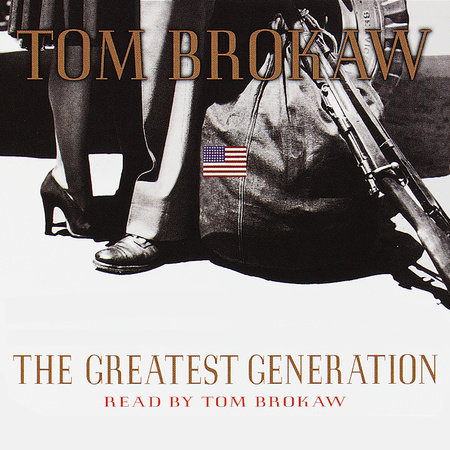
Every generation thinks the challenges it faces are more important than what has gone before. American journalist Tom Brokaw bestowed the name “the greatest generation” on the people who grew up in the Great Depression and went on to fight in the Second World War. As a late “baby boomer” myself, I certainly take my hat off to that generation. The Boomers were named for demography: they were a bulge in the population (“the pig in the python”) caused by soldiers returning from the war. They saw themselves as special, and maybe they were. They invented sex in the 1960s,...

Stories from 2045

Sparky, a NAO robot who lives at Queen Mary University, helped launch a book this week.  In the very whooshy surroundings of the Reform Club on London's Pall Mall, she read out a story written by an AI.  It's not a very good story, to be honest, but it's impressive that an AI can write stories at all. The other stories, written by humans, are very good indeed.  You’ll find them at an Amazon site near you. They speculate on what life might be like during and after the economic singularity.  Two-thirds of them are positive, which is what we...
Reviewing last year’s AI-related forecasts

Reviewing last year’s AI-related forecasts

As usual, I made some forecasts this time last year about how AI would change, and how it would change us. It’s time to look back and see how those forecasts for 2018 panned out. The result: a 50% success rate, by my reckoning. Better than the previous year, but lots of room for improvement. Here are the forecasts, with my verdicts in italics. 1. Non-tech companies will work hard to deploy AI – and to be seen to be doing so. One consequence will be the growth of “insights-as-a-service”, where external consultants are hired to apply machine learning to...
Book review: “21 Lessons for the 21st Century” by Yuval Harari

Book review: “21 Lessons for the 21st Century” by Yuval Harari

The title of Yuval Harari’s latest best-seller is a misnomer: it asks many questions, but offers very few answers, and hardly any lessons. It is the least notable of his three major books, since most of its best ideas were introduced in the other two. But it is still worth reading. Harari delights in grandiloquent sweeping generalisations which irritate academics enormously, and part of the fun is precisely that you can so easily picture his colleagues seething with indignation that he is trampling on their turf. More important, some of his generalisations are acutely insightful. The insight at the heart...
Don’t shoot the Messenger

Don’t shoot the Messenger

"It was Facebook wot dunnit.” Select the unpleasantness of your choice, and Facebook is almost certainly being blamed for it by someone, and probably a lot of someones. Also in the dock are YouTube and Twitter, with Instagram and Snapchat lurking about, keeping their heads down and hoping that nobody notices them. The charge sheet is long. Facebook and the other social media have shortened our attention spans, leaving us easy prey to slick salesmen with plausible one-liners. They have corralled us all into echo chambers, so that we only ever hear voices telling us what we already think. We...